Friday, October 23, 2020

 NORTH COAST REP. OFFERS UP A BIT OF FLUFF IN BERNARD SLADE’S VINTAGE “SAME TIME NEXT YEAR”


“The Times They Are A Changin.” Over the course of twenty five years, people change; love grows deeper; people fall out of love, grow older and values change. In Bernard Slade’s bitter sweet love story, his 1975 “Same Time, Next Year”, starring the real husband and wife team of Bruce Turk as George and Katie MacNichol as Doris, and directed by NCR’s artistic director David Ellentsein the couples’ once every year clandestine rendezvous brings with it a new revelation with each passing year.


The play unfolds every five years starting in 1951 in a comfortable Spanish style (Marty Burnett) motel room in Northen Ca. They met over a steak dinner. No, they were not dining together, he sent a steak over to her table as a gesture. I guess people fall in love over less expensive food choices, but that’s the story we’re stuck with. It doesn’t end there, however. It moves into an overnight tryst and then to a weekend long date, one laced with guilt laden explanation as to why and how it’s going to work out. 

The two are so uptight that first morning when they awake, and after a night of lovemaking Doris wraps herself up in the bed sheets crawls out of bed and gets dressed in the bathroom. That doesn’t stop them, however from meeting at the same time and same place each year.


No big surprise. The next scene, five years later (we know because there is a hint hanging on the piano: ‘5 year anniversary’ in bold red letters) the clothes and wigs have been updated from 1956’s to ‘70’s (Elsa Benzoni and Peter Herman) with 50’s dresses with garter belts and crinoline slips to hipster beads and suede vests to slacks and tops for Doris with an assortment of wigs noting the hair styles and slight noticeable changes in the styles of George’s clothes, the lapel widths, shirt designs and a slight graying at the temples.

They talk, they sleep they exchange little stories about their lives, their mates and they make love. In fact, in that time George and Doris made love together one hundred and thirteen times. Now most married couples, at least the ones I know don’t keep track of their lovemaking, but here’s the scoop: Doris and George are married but not to each other, they are carrying on a ‘secret’ love affair behind their spouse’s backs and George is a wiz at numbers. 


Slade is clever enough to toss in just the right amount of pathos, family illness, the Vietnam War, the drug culture, death of a child, near death of a spouse. He balances the serious with the light and frivolous, and to the actor’s credit, they manage it with ease making the most of the situations and giving it and them a measure of credibility. 

Over the course of the years she grows more self-assured, finishes college, opens a thriving business and learns to be content with her husband, George. On the other hand, he grows more serious as his business grows and he sees Doris changing, but not at all to his liking. 

Both manage to rein in their differences as they become more in tune with each other, older, comfortable and the shifting attitudes of the times. Their personal triumphs and disappointments are met with understanding and love as they share stories, empathize and commiserate; he even helps with the birth of her fourth child in one of the funniest scenes in the play.

Slade’s play ran on Broadway from 1975 to 1978 with over 1,453 performances and was later (some might remember) made into a movie starring Alan Alda and Ellen Burstyn. It earned her a Best Actress Award. Slade also created “The Partridge Family,” “The Flying Nun “and “Bewitched”. Now that would be fun to see. But more than morals changing and with everything going viral, in retrospect its difficult not to wince at the dialogue, gender roles, reference to race and religion (“You must be Jewish… because they’re always feeling guilty.) and corny jokes. As I said it's vintage, but not necessarily good.


To that end, with Covid in the picture and theatres having to reinvent themselves “Same Time Next Year” with husband and wife playing against each other, the choice of this two person play makes sense at least as a filler. 

 I can't help comparing the excellent and intense past production of  "Necessary Sacrifices” and "Same Time". It is a bit like comparing apples and oranges, you can’t. That’s not to take anything away from the fine acting of Turk and MacNichol, and perhaps a little levity is what folks at home want to see. 

I may be an old fuddy- duddy, but give me something fresh and new and gutsy and I’m a happy camper. 


“Same Time Next Year” will be streaming on line through Nov. 15th. @northcoastrep.com

North Coast Rep. 987 Lomas Santa Fe Drive  #D, Solana Beach, Ca.  

Photos: Aaron Rumley

Props: Philip Roth

Phone: 858-481-1055


Saturday, October 17, 2020

             ROUSTABOUTS RAISES ITS POLITICAL VOICE ONCE AGAIN IN “CHARGE THE BEAR”

The dynamic duo of Freedman and Johnson are at it again. If you recall the two tackled the Hollywood Blacklist fiasco of the 50’s in a one man show, “A Jewish Joke” starring Johnson as Bernie Lutz, funnyman, writer, comic and actor.  

In this ‘bitter comedy’ Lutz came under the evil eye of Joe McCarthy’s House Committee on Un American activities whose one purpose was to ‘out’ anyone in the entertainment industry (read Blacklist) that had any connections, past or present, to the Communist Party, causing them to lose their jobs and taint their reputations putting them out of their work. Most of the targets were Jewish entertainers including directors, actors, writers and performers.

The duo is at it again with another solo show starring Johnson in “Roosevelt-Charge the Bear”. It’s another look into American  politics but this time it’s about founder of the ‘Bull Moose’ Party, Teddy-Theodore Roosevelt whose rise to the presidency came as much of  a surprise as well as chagrin to him as it did the Republican Party after the assassination of President McKinley.

              Photos by Daren Scott

Curiously, after watching all of Ken Burn’s five or six part series on the Roosevelt’s I came away with little memory of his accomplishments as the 26th.  President of the United States.  With the exception of (and no easy fete) his being a conservationist, historian, naturalist and explorer, he will be remembered by his 1898 organization of the Rough Riders, the first volunteer cavalry in the Spanish American War. They were best remembered for their charge up San Juan Hill in 1898 years before he became president.  His likeness is also carved on Mount Rushmore along with Thomas Jefferson, Abraham Lincoln and George Washington. 

At the ripe old age of 43 he was then the youngest President in the nation’s history. He brought with him a more progressive agenda than the traditional Republican mantra claiming that the President is the “steward of the people” and should take whatever action necessary for the public good. Nothing could have prepared him for the fight the established Republican party would give him as he struggled to settle the eastern Pennsylvania coal miner’s strike of 1902. He tried bringing together mine owners, money men like Carnegie, and Rockefeller to the United Mine Workers of America and the miners to negotiate for better housing, higher wages and safer working conditions


He hones in on a letter he received from a young boy (13 years old) whose brother who is nine and working in the mines and already is sick from the fumes he inhaled He carries the letter around to remind himself of what’s happening in the real world outside of politics as he travels the country by train from Bangor, Maine to Burlington, Vermont to Providence, Rhode Island and beyond reaching out and meeting those waiting to see him. 

In this exciting world premiere, Marni Freedman and Phil Johnson along with actor/ director Rosina Reynolds have given us a clear picture of the 26th President’s, early into his presidency one of the biggest challenges of his career: solving or putting an end to the coal miner’s strike. When he learns that one hundred and forty thousand men are on strike including the firemen, engineers and pump men it’s difficult for him to fathom that there will be no heat, and American’s would “die in the streets, to literally freeze to death in their own homes.” ‘And the party and money men wanted me to sit down and shut my mouth."

The play pivots back and forth in and around other locations but for most of part Johnson’s Roosevelt is either sitting behind his desk in the oval office (Tony Cucuzzella) or walking around it, or sitting at its edge, getting a shave and/or talking to reporters or talking about taking a hike with reporters.  He valued the opinions of the reporters to keep him on track and tell the truth. 


The conversations give background into his inner thinking about the job he was thrown into, the few ally’s he thought he had inside the Republican party (Senator Mark Hanna, “Now that damn cowboy is president.” ) but really never had, to the deaths of both his mother and first wife coming hours apart, to his enthusiasm about building the Panama Canal; about his sisters disability from a spinal condition and how he encouraged  science and medicine to work together to help all those with physical disabilities by making less cumbersome braces (not to mock them as our current leader does). 

In a reflective moment he reminisces about the time he invited his friend Booker T. Washington to dine at the White House. Later in response to the invitation from the senator of South Carolina, senator Tillman “we shall have to kill a thousand of them to get them back in their places”. I can hear Lindsay Graham referring to Jim Crow laws as the ‘Good Old Days’. Not much has changed in the Republican party or South Carolina.

Johnson, who acts  as Artistic Director and a pro at heart, does throw his heart and soul into giving the audiences a clear picture of another man of history whose heart and soul were definitely for the American people. From his early days as his time as a conservationist to the story of his stalking ‘The Bear’ to’ hunting the bear’ to admitting that he was ready to ‘charge ‘the bear (intervene in the strike), his is a performance well worth remembering. It carries with it the utmost sincerity, confidence and genuine belief in his character. Presidential is a good word. For ninety minutes his presidential posture never falters as he transforms himself to become Roosevelt. 

As the other dynamic duo of director Reynolds and actor Johnson this show is flawless, inviting and engaging and definitely worth watching, perhaps more than once as the character of Roosevelt the man is in such stark contrast to the one sitting in the White House now its mind boggling. The comparison is a lesson in humanity/humility for all who cherish our democracy and  miss right now!

The making of a production (i.e. filmed staging)  during the time of a pandemic involves the work of many behind the scenes technicians from stage manager Jassmyn Foster, to costume designer Jordyn  Smyley (period clothes perfect) to assistant Costume Designer Ross Stewart, to Lghting Designer Joel Britt to Sound  Designer Matt Lescault-Wood to Director of Photography/Editor Michael Brueggmyer and last but not least Daren Scott’s wonderful photos of Roosevelt the man looking very presidential.  

The show runs through Nov. 2nd 

Tickets: $25to $100.00

Phone: 619-568-5800

Theatre: Roustabouts @theroustabouts.org.

Two thumbs up!


Tuesday, October 13, 2020


           LIFE IS A 'CABARET' AT LAMB'S PLAYERS THEATRE


If you like the music and songs of Johnny and June Cash, Joni Mitchell, Judy Collins, Woody Guthrie, Paul McCartney to name a few, you will love Lamb’s now on line show, "Lamb's Cabaret". It was filmed live, directed by Robert Smyth, and is now being streamed on any number of your home devices  through Nov. 1st. Running time is 50 minutes. 


Staring husband and wife team Caitie Grady and Charles Evans, Jr. 
with Cris O'Brryon on piano, it's a fun, upbeat and entertaining show. The couple show off their many talents together and oft in solo as Evans repeats some of the Johnny Cash songs from Lamb's mega hit "Million Dollar Quartet" just this past year. 


Both artists are among the companies resident artists at the theatre. Their recent performance "Babette's Feast had the audience holding their breaths while the couple showed us their talents in gorgeous arias from Mozarts "Don Giovanni". 

The two also performed together in "Once" and "Chaps.  Always up beat and comfortable with each other, this 'Cabaret' will keep you humming long after its over. 


Photos: Lamb's Players Theatre. 

Friday, September 25, 2020

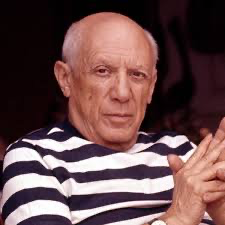
                 PABLO PICASSO IS ALIVE AND WELL!


 Not this Picasso! 


This Picasso!  

“A Weekend with Picasso” was the work of a lifetime for Herbert Siguenza; one that the actor/ artist had been preparing for a lifetime. He is simply wonderful, playful and completely at ease as Picasso’s alter ego in this wonderful tour de force.
 
“A Weekend with Pablo Picasso” was workshopped at the San Diego Rep. in 2010 as work in progress. Siguenza, a founding member of the performance group Culture Clash, wrote the piece, which includes quotes from Picasso’s writings. 

The piece was mounted once again three years ago at New Village Arts Theatre and now The San Diego Rep. is presenting the film adaptation of the play for your viewing through Oct.14th. 

I found it interesting…well alarming how my memory failed me after watching the streamed film version recently as I struggled to remember some of the scenes. Yes, some of the newer clips of film were taken outside his residence in the South of France 1957 but the rest was filmed on the stage of the San Diego Rep. The outside scenes were actually lovely and gave an openness to the production.


Herbert Siguenza takes on the role of Picasso with relish. He will tell you in chapter and verse about the man himself as he channels Picasso’s every move, mannerism, mood, philosophy, chuckle and thought. He dances, clowns, speaks several languages and gets dead serious about politics, past and present. It all starts as he is lathering himself in his bathtub. Speaking directly to the audience,  he agrees to let us in on his work habits only of we promise to leave at the end of the weekend.  


An accomplished arti/painter in his own right, Siguenza will paint a few portraits on stage; some still life and embellish some already finished products. He will tell you about the women in his life, (“When I kiss a woman, I leave my eyes open. I want to see everything”) his politics (with passion) and what a great person he is. Well? “I do not wish my celebrity on anyone…not even my worst enemies” …” The whole world demands from me”. 

He’s seventy-six at the time action takes place. “Time is a bandit. When it’s gone, it’s gone. Like a taxi meter. No argument. The older I get, the stronger the wind gets-and it’s always in my face. I’m afraid I have less and less time yet more and more to say”.
                
At the time of the play, the icon Picasso is to work on a commission for six painting and three vases for a wealthy patron. The play takes place over a three-day weekend in his studio in the South of France where he is working feverishly to complete his commission. Speaking directly to the audience, as the performance opens, he agrees to let us in on his work habits only of we promise to leave at the end of the weekend.  

Visuals of a painter at work are everywhere; a pencil drawing of a young Picasso, a photo of Picasso with his wife Dora Maar, cubist paintings, African art, a photo of Picasso working on Guernica, (Giulio Perrone scenic/with recreated styles and clothing that Picasso actually wore in famous photographs by Douglas Duncan 1957/59 that some might call casual elegance.). His studio is visual wonder packed with wooden packing crates, books, photos, food, clothing, easels, engravings with hand scrawled messages and reminders about. 

For this reviewer it was a pleasant trip down memory lane when things were simpler and going to the theatre was a treat and a time to gather with old friends. 

Yes, Picasso is alive and well and as long as we cherish the memories of Siguenza’s Picasso we can focus on that.
*******************************************************

The production is directed by Tim Powell and Todd Salovey, with Sam Woodhouse as Producer. The production team is rounded out by: Chelsea Smith (1st Assistant Director); Catharina Cojulun (1st Assistant Camera); Ashley McFall (Gaffer); Evan Rayder (Grip & Electrician); Matt Lescault-Wood (Sound Mixer & Recordist); Anastasia Pautova (Art Director & Costumes/Props); Sammy Moore (Set Design & Art Department Lead); Kate Reynolds (Location Scout); and Kim Heil (Associate Producer).

The cost of a ticket is $35.00 and can be purchased on line at: sdrep.org/picasso


Monday, September 21, 2020

 "The Niceties": Celebrating Sixteen Years of Plays By Women in Celebration of Women.


Congrats to Moxie Theatre on the opening of its sweet sixteenth season. No easy fete this, in the middle of a pandemic where theatres are closed to audience participation and involvement. 

Now the actors must rehearse through zoom and other creative measures. After final rehearsals the actors and necessary staff come together shortly before shooting the film version of the staged play.  Before this show begins, there is a short documentary as to how its all done.

This seems to be the norm so far as theatres getting their audiences as close to being there as not. By using this device, director Delicia Turner Sonnenberg managed to present to audiences a thoughtful, dramatic, informative and sometimes tense  production of "The Niceties" by Eleanor Burgess. 

Deja Fields and Mouchette val Helsdingen

"The Niceties" is a relative new play. It was developed at the Contemporary American Theatre Festival in Shepherdstown, West Virginia in 2017 and made its world premiere during the 2018-19 season in a co-production with the Huntington Theatre Company. 

Burgess studied History at Yale College. “The events in “The Niceties” are based on her own experiences and the clashes over diversity on the Yale campus. 

The play is as contemporary as BLM and racial discrimination in Ivy League Schools, though it has a history lesson that dates back further than 1619/The 1619 Project, perhaps in the 1500’s when the first slaves, about 350, were brought to American shores in Virginia by Portuguese and Spanish slave ships. 

When we first meet our two protagonists Janine, (Mouchette val Helsdingen) and Zoe (Deja Fields) in Janine’s office at an ‘elite university' in the Northeast, Zoe is waiting for American History professor Janine to read over and correct her grammar and historical content of the first draft of her history thesis. Zoe is fine with the grammatical corrections but not so much the corrections about her historical findings. (“I’m afraid you’re in for a substantial rewrite”)  Her paper , “A Successful American revolution was only possible because of slavery”.  Janine off handedly remarks it’s “one of the more imaginative ideas I’ve seen”.


If you weren’t already suspicious of this two hander, Zoe is an African American undergraduate student most likely from privilege and Janine is, well, white and tenured and from a generation ago where Blacks were told to be patient and not make waves.  We learn that she worked her way up the ranks with many publications.  She comes from a modest background, a child of working class parents, is gay, married with a grown, university student, and a son with whom she is estranged. 


It’s a setup that's able to segue deep into discussions of racism, sexism, diversity, privilege, power and the toxicity that permeates this country today. It was even more so when the play was written three years ago. It’s amazing what a change in administration can bring. 

As you might imagine the women duke it on just about every level of political discourse, from when the first slaves were brought to our shores to Googling history, to actually reading about it in hard covered books, to George Washington, the American Revolution, to the abolishment of slavery and what version of history you choose to see in the history books. 

When the volume of disagreements rises, and the combatents are ready for for the kill, all bets are off; all the niceties are left at the back door. And…unbeknownst to Janine, Zoe taped their conversations and posted them on line.  They went viral. In so doing it not only exposed Janine causing the end of her tenure, but put Zoe on notice that she too has ruined her chances of getting her dream job. 

In director Turner-Sonnenberg's deft hands and with some pretty compelling acting, each would earn high grades from this retired kindergarten teacher turned theatre reviewer. Watching the exchange of ideas was like watching a tennis match with the energy toggling from one woman to the other with whip-lash accuracy. At times I found myself rooting for one over the other and then vice versa. 

Both women are up to the task. Deja Fields’ Zoe is sure of herself, rather smug and is as confident in herself as the day is long. Mouchette van Helsdingen’s Janine shows a condescending side at the outset but soon realizes she might have met her  match. They take each other on like the dueling divas, but in the end, there are no winners no losers just differences of opinions. You might find yourselves like yours truly, yearning for discussion, which there was after the performance. 

It takes a village to make a production like “The Niceties” work.  The whole was carefully orchestrated and filmed by Canis Lupus Productions.

The all-female and non-binary Design and Production Team includes: Set Design, Julie Lorenz; Costume Design; Faith James; Lighting Design, Cynthia Bloodgood; Sound Design, Mason Pilvesky; Properties, Angela Ynfante; Stage Management, Beonica Bullard; Photos curtesy Moxie Theartre; Assistant Director, Vanessa Duran. 

“The Niceties,” the filmed version from Moxie Theatre, can be viewed through Oct. 4

Showtimes are 7 p.m. Thursday-Saturday and 2 p.m. Sunday; added 2 p.m. performances Sept. 21-24. .
Tickets ($35 per household, with discounts available) . Phone 858-598-7620 or  moxietheatre.com/playing-now/the-niceties

Running time: 2 hrs., 45 min.

Of her work, Burgess says, “I write to understand things, I write about things that confuse me, I write about things that trouble me, topics where I really thought I knew what I believed and then someone said something that shook me down to my core and all of sudden I realize that maybe I don’t know what I believe.” 

See you on Zoom at the theatre.


Sunday, September 13, 2020

 "NECESSARY SACRIFICES": A DEBATE THAT STILL RAVAGES AMERICA


 ‘Emancipation is not abolition’. Slavery must be eliminated from every foot of American soil! Finish what you started. What you started. (Frederick Douglass)

Until I watched the excellent production of North Coast Repertory Theatre’s west coast premiere “Necessary Sacrifices” by Richard Hellesen directed by Peter Ellenstein, the two ideas didn’t seem that far apart. 

When President Lincoln issued the Emancipation Proclamation in 1863, he declared “that all persons held as slaves” in the Confederate State (if the states did not return to the Union by January 1st 1863 and if the Union won the war) “are, and henceforward shall be free, most assumed free meant ‘free’. What was left unspoken between the lines is what we have today. 

“A house divided against itself cannot stand.”
I believe this government cannot endure, permanently half slave and half free.
I do not expect the Union to be dissolved — I do not expect the house to fall — but I do expect it will cease to be divided.
It will become all one thing or all the other.” (Abraham Lincoln)

In case you have been hiding under a rock these last four years, The Civil War, to this day, is still being fought and we are indeed, contrary to Lincoln’s speech deeply entrenched in a divided house.

In an absorbing, close to flawless production we, the home audience (more on that later) are treated to conversations, according to history, that Frederick Douglass and Abraham Lincoln’ had in two meetings banter on the idea of the Negro soldier in the Civil War that could/ might have changed the course of history. 

To some degree it did, but in the long run, the idea of emancipation rather than abolition and all the ramifications that come with, are being played out in neighborhoods across this country, from north to south, east to west. In an age old debate that still ravages this country, African American are still not completely free. 

Hellesen’s play commissioned by Ford Theatre made its world premiere in 2017, takes us back to the summer of 1863/1864 in Abraham Lincoln’s office where the debate for equality for the ‘Negro soldier’ is on Douglass’s mind if he is to help Lincoln recruit ‘Negro’s to fight in his war. 

In a give and take that’s as real today as it was in 1863/4 both actors flex their acting skills as the back and forth takes them to places no one expected. Lincoln and Douglass offer differing takes on the same subject of slavery, the right to vote the war and politics and Lincoln’s reelection each one coming from a different point of view yet expect the same results. You know what that is a definition of?

The two skilled actors, tall, lanky and relaxed, personable and down to earth Ray Chambers as Abraham Lincoln gives the impression that he has all the time in the world to hear Douglass and his ideas out. Coaxing even prompting him to justify himself. There are also bittersweet and intimate conversations about their children and wives.  

Hawthorne James’ Douglass, solid looking, formal and eager to get a commitment from Lincoln is no holds barred with his wants from the president. Both hold fast offering their reasons; Lincoln sticking to the makeup and Constitution the idea of states rights and wanting to end and win the war and Douglass returning to reality of the necessary sacrifices of his men if things remain the same. Even pushing the envelope he expects the government (Lincoln) to grant the Negro the same rights as the white (man) and that included voting rights. 

Hawthorne is said to have done this show in concert style a few years ago. Both actors looked and gave the impression that they were more than comfortable in their respective roles. 

Voting for the Negro doesn’t happen until Feb. 26, 1869 when the 15 amendment granted African American men the right to vote. Women didn’t get the right to vote until Aug. 18 1920 (technically) when the 19th amendment passed, but it was some time before all states signed on. 

In an age of what some are calling this the new normal, everything is new and nothing is normal. Since the shuttering of theatres around the world, (as most indoor venues) theatre junkies (OK I’ll just speak for myself) have gone M.I.A. It’s almost like losing your best friend; no one to hang out most nights and especially on weekends. 

Streaming and Zoom chat rooms are popping up all over the place and watching interviews (North Coast Rep) with Artistic director David Ellenstein with actors you are used to seeing on stage are now becoming your best friends.

That being said, this particular production of “Necessary Sacrifices” comes as close to being in the intimate space of the theatre he as one can get without actually having you tush in a theatre seat. According to the theatre the actors rehearsed separately and when sets, costumes lighting were ready and the actors were in final rehearsal Aaron Rumley  filmed and edited following all the SAG guidelines. What we see is the filmed version that will be available for your viewing through Oct. 11th. 
Cost of tickets run between $24.00 and $40.00 at northcoastrep.org

The play together with accurate period costumes by Elsa Benzoni, Peter Herman’s wigs, Marty Burnett’s take of Lincoln’s casual White House office, Michael Silversher’s music and last but by no means least, Aaron Rumley’s editing and choreography. 

Coming up next “Same Time Next Year” by Bernard Slade. It will be running Oct. 21 to Nov. 15, 2020.


Monday, March 9, 2020

“Glass Menagerie” Resurfaces At Broadway Vista Theatre.

Tennessee Williams memory play “The Glass Menagerie” still resonates after all these years. It opened in Chicago in 1944 and subsequently moved to The Playhouse Theatre in New York in 1945. It went on to win the New York Drama Critics Awards. It is currently in a sobering, yet oft times superficially funny production in Broadway Vista Theatre (‘The biggest Little Theatre’) through March 22nd.
Set design by Randall Hickman 
The play is set in the St. Louis apartment of Amanda Wingfield (Terri Park) and her two adult children, Laura (Marisa Taylor Scott) and Tom (Tim Baran). The time is 1937 and the country was in the middle of the depression. Tom works in a shoe factory (Williams sold shoes for a time) and Amanda sells magazine subscriptions from her home, much beneath her status as a genteel Southern belle when a young girl. 

Money is tight but hope springs eternal for Amanda, the faded yet once popular belle, as she glides around their apartment recalling her glory days as a teen growing up in the south. Her repeating and reliving her past encounters with her own ‘gentlemen callers’(seventeen in one day) fascinates Laura, who longs for a gentleman caller of her own, but it annoys the hell out of Tom.
Terri Park and Tim Baran as Tom
Amanda doesn’t comprehend why none come to call on Laura, her emotionally fragile daughter whose noticeable limp has her cut off from reality and plunges her into a make believable world of a glass animal collection, her favorite being the unicorn, a solitary and mysterious creature, much like Laura was to her mother. 

Baran’s Tom is narrator (Williams alter ego) speaking directly to the audience while also assuming the role of Tom: “The stage magician gives you illusion that has the appearance of truth. I give you truth in the pleasant disguise of illusion."

As narrator breaking the fourth wall, he tells us that he would rather be any place than at his mother’s house. He longs for adventure, action and escape. He’s annoyed at her nagging, her interfering, her stories of past glories and her pettiness. Everything he does; drinking, writing and spending most of his off hours at the movies, a tale Amanda refuses to believe, pushes him closer to leaving.  The one thing he can’t ignore is his affection for his sister.

Nathan Wetter as Jim and Marisa Taylor Scott is Laura
Nathan Wetter’s Jim O'Connor Laura’s one gentleman caller is a breath of fresh air. His mere presence in the Wingfield’ s home casts an unusually broad shadow bringing with it a sense of hope and optimism even though his own dreams have been shattered. A popular athlete in high school and someone Laura once had a crush on and now a shipping clerk at the same shoe factory as Tom, his invitation to dine with the Wingfield’s brings a ray of hope for Amanda.

His repartee with Laura is sincere, convincing and winning and one that many hoped would have turned out differently for Laura. Wetter fills the bill perfectly as Jim. Unfortunately for Amanda who had high hopes for Jim, it began and ended in one evening. This is a tragedy of Greek proportions after all.

And so the last words that Tom speaks, “Blow out your candles, Laura, - and so goodbye.” breaks your heart as Tom, the one ally Laura has leaves the house to the two emotionally fragile women who are left to their own devices to survive; one’s imagination wanders to the next step.   

 ‘Menagerie’ was Williams’ first successful professional play and his most autobiographical. Laura or Rose, his sister, (as was her given name), who was thought to be mentally ill because of her instability, underwent a frontal lobotomy that just about sent her brother over the edge. Some even suggesting that it was the cause of his heavy drinking
Tim Baran, Terri Park and Marisa Taylor Scott
Williams would later expand on this literary form as he showed us in his ‘Menagerie’ with matriarch Amanda and her mood swings, (look at Blanche in “Streetcar”) her almost hysterical yearnings for her lost youth, her daughter’s inability to cope and her son’s threat of leaving them. Tom was, after all, the primary breadwinner in the family.  He was so much like his absent father, the one character never seen but for a photograph on the wall, that his leaving was but a matter of time.   

Doug Davis and Randall Hickman producers, set designers, lighting designers, costume designers, you name it are a two person dynamic duo responsible for the whole ball of wax including the choice of plays selections. According to Davis, ‘he and Randall love Williams and wanted to include one of his plays in this year’s lineup.’ On the lighter side, “Beau Jest” and “Brighton Beach Memoirs” (Neil Simon’s first of his ‘B’ trilogy) follow.
Nathan Wetter and Marisa Taylor Scott
Hickman directs as well as digging in on other projects to make this production user friendly. His set design is especially attractive, somewhat easily navigable in such a small space, slightly off center as are the characters, and on spot time period with props by both men adding touches into a glimpse of the times.

Under his direction the ensemble worked well together but individually, the overall the production was uneven on opening night. Terri Parks putting in a very strong Amanda, with every detail of her as the domineering mother and head of household was on target.  Its no wonder Marisa Taylor Scott’s Laura cowered under strong personality and Tom recoiled from her. She just didn’t get it.
Terri Park and Maisa Taylor Scott
Some grievances that distracted include the fact that Baran’s projection and enunciation wasn’t clear enough to meet my listening standards and Ms. Scott’s almost senile behavior (while it might have been in the script, she was painfully shy, delicate and compassionate and to my recollection an ‘emotional cripple’, but not senile) was disturbing.

And stepping off my soapbox, if there is one theatre or ten mounting a Tennessee Williams play, make every effort to see it (them). Not enough theatres are producing the classics. Here is your chance. 

Kudos to the men behind the curtains for their brave undertaking.


See you at the theatre.


Dates: Through March 22nd
Organization: Vista Broadway Theatre
Phone: 760-806-7905
Production Type: Drama
Where: 340 East Broadway Suite B, Vista, CA 92084
Ticket Prices: $25.00
Web: broadwayvista@gmail.com
Photo: Randall Hickman